





Some workouts feel good in the moment. Others feel like a trap. The body tightens, breathing gets weird, and the mind starts yelling, “Stop.” That can happen even during a “beginner” session. It is not laziness. It is not a lack of discipline. It is the nervous system deciding the load is too much, too fast.
A lot of fitness advice misses this. It assumes exercise always feels energising. But for many people, intense classes, loud cues, and fast breathing can flip a stress switch. The goal here is different. The goal is movement that leaves the body steadier than before. Stronger too, but steadier first.
This guide explains how to train without poking that alarm system. It also explains how strength can still be built, even when workouts stay calm and controlled.
What Overwhelm Actually Looks Like During Exercise
Overwhelm is not always panic. It can be subtle. It can look like suddenly hating the workout. It can feel like irritation for no reason or a heavy urge to lie down. Some people get light-headed. Some people get shaky. Some people feel disconnected, like the body is moving but the mind is not really there.
A common example is this: the workout starts fine, then the pace speeds up. Breathing turns sharp. The brain notices the heartbeat. Then the thoughts start racing. Nothing is technically “wrong,” but everything feels wrong. That moment is the signal.
It helps to treat it like a smoke alarm. The alarm is not the fire. It is the warning. When the warning shows up, the best move is adjusting the session so the body settles again. That keeps exercise from becoming something the body learns to fear.
Why Some Workouts Feel Unsafe, Even When They Look “Healthy”
The nervous system loves control. When training removes choice, stress goes up. Timers, fast circuits, and constant transitions can create that trapped feeling. The same thing happens in crowded rooms or when a class feels performance-based. Even at home, a video with nonstop talking can feel like pressure.
Breathing plays a big role. Hard cardio changes breathing quickly, and those sensations can feel close to anxiety symptoms, including common hyperventilation symptoms, so the brain can flip into alarm even when the body is safe.
Pain and joint strain also matter. If knees, hips, or wrists feel unstable, the body stays guarded. Guarding creates more tension. More tension makes everything feel harder. It becomes a loop.
Safe training breaks that loop by keeping things predictable and clean. It gives the body a clear message: “Nothing is chasing you here.”
The Safety Ladder for Intensity
Intensity does not need to be banned. It just needs to be earned. Small, steady steps matter because the goal is calm effort, not alarm, and research on exercise and anxiety links regular activity with improved anxiety symptoms for many people when it stays sustainable. Start where the body stays calm, then move up slowly.
- Gentle mobility and walking
- Light strength with longer rests
- Moderate strength with shorter rests
- Steady conditioning at a talkable pace
- Hard intervals, only when calm stays present
A quick check helps. If speaking feels hard, the pace is high. If breathing is loud and sharp, the body is drifting into alarm. Slowing down is not quitting. It is choosing the right rung.
Why Pilates-Based Strength Often Feels Safer
Pilates-style training tends to feel steadier. The movements are controlled. The pace is clearer. There is less chaos. That is a big deal for anyone who gets overwhelmed by fast classes.
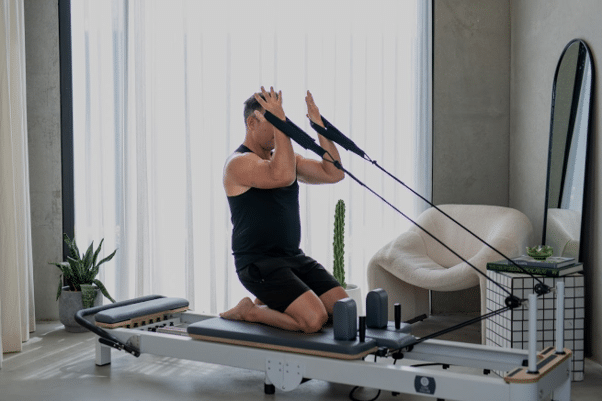
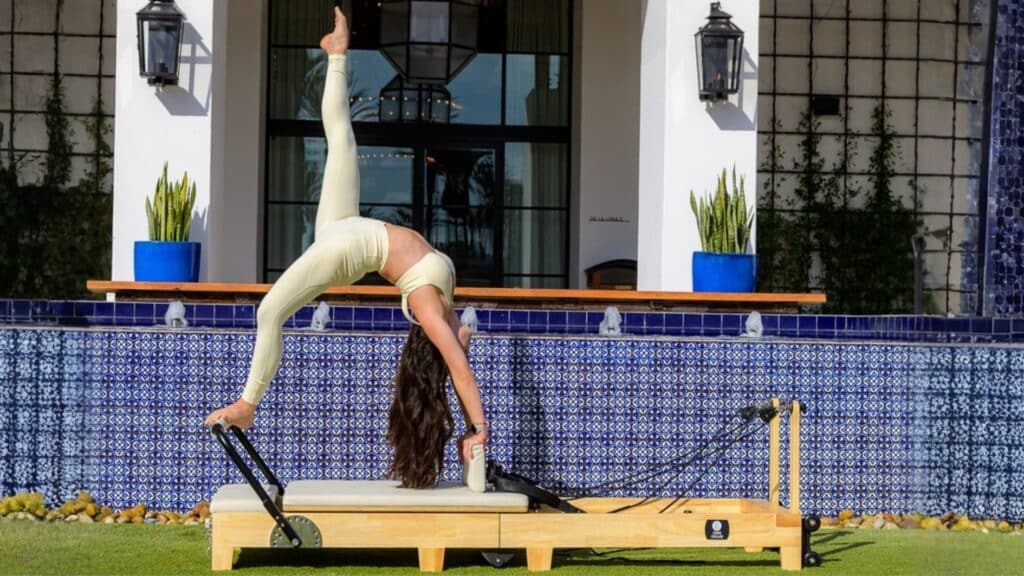
Equipment can support this even more because it adds structure. Springs create smooth resistance, and the setup encourages alignment. A Pilates chair is a good example. It can train legs, core, and upper body without impact, and it is easy to scale when energy is low.
For readers building a calmer home routine, a stable option like a supportive chair pilates setup can make strength training feel more guided and less stressful.
A Warm-Up That Calms the System, Not Just the Muscles
A warm-up should change state. It should take the body from “wired” to “ready.” That happens through slower breathing, slower movement, and simple positions that feel grounded.
Start with a few minutes that feel almost too easy. That is the point. Long exhales help. Gentle spinal movement helps. Simple hip and shoulder circles help. If the shoulders drop and the breath becomes quieter, that is the green light.
If the breath stays tight, stay in the warm-up longer. That is not wasted time. That is training the nervous system to trust the session.
A Calm Strength Session Template That Still Builds Progress
Safe training needs a pattern. Pattern creates safety. Here is a simple structure that works well for stress-sensitive days.
Pick three movements. Use a slow tempo. Rest enough to reset breathing. Stop the set before form breaks. The workout should feel challenging, but not chaotic.
A good starting mix is a squat or lunge pattern, a push or pull pattern, and a core stability pattern. Keep the range small at first. A bigger range can come later.
Progress can be tiny and still meaningful. Add one set. Add a little resistance. Or slow the reps down. Those changes are easier for the nervous system to accept than a sudden jump to hard intervals.
What to Do When Overwhelm Starts Mid-Workout
When overwhelm shows up, the goal is simple: bring the body back down. Fighting it usually makes it louder.
Pause. Sit or kneel. Take three long exhales. Then switch to a gentle movement for one minute. After that, choose a simpler version of the next exercise. Smaller range. Less resistance. Longer rest.
If the body still feels unsafe, end early and cool down. That is still a successful session because it protects the habit. It also teaches the body a better lesson: stopping is allowed, and recovery is available.
Progress Without Pressure
Progress is not only “more intensity.” Progress can be finishing without dread. It can be breathing calmly during a set that used to feel scary. It can feel steady the next day.
Keep changes small. Change one thing at a time. That is how the nervous system learns. Fast jumps feel risky. Slow steps feel safe. Safe steps become consistent. Consistency creates the results people actually want.
Conclusion
Movement that feels safe is not a soft option. It is a smart one. When the nervous system stays calm, the body can work, learn, and recover. Strength builds. Confidence builds. The habit starts to feel supportive instead of punishing.
The real goal is not finishing destroyed. The goal is finishing steadily, with enough challenge to grow and enough calm to return tomorrow.