



by Dr. Bella Ellwood-Clayton | October 2024
“You screwed up again.”
The words are harsh, they are meant to be. This is real talk. The “nice mom” persona—sensible, carefully-worded, making vegetarian soup while listening to singer-songwriters on Spotify—has slipped away: now it’s one animal to another, mother to daughter, discussing the most dangerous of terrains: Social jungle hierarchy.
Half-dressed for school, she glances at me in the bathroom mirror, where she’s been touching up her makeup—at twelve, I know. (Since when did the eyelash curler become the most coveted item of middle class girls in this age bracket? Answer: Blame TikTok.)
Although she doesn’t respond to me verbally, her eyes scream: Leave me alone!
Not happening. I need to coach her before she goes to school and blows up her life.
“How could you have done this?” I reprimand her, breathing in the fumes of artificial teen body spray. “You of all people should know what can happen.”
The last time she lost her temper at school she was eight-year-old. She and her best friend got into a fight over a third girl who was encroaching on their relationship. My daughter and her best friend wrote nasty Post-It notes back and forth during class. Afterward, my daughter threw the notes away, her friend kept them…and showed her mom. A yellow Post-It note with the word “bitch” scrawled across it.
Inevitably, a dreaded conversation with the mother ensued, and henceforth, her daughter was banned from being friends with mine. A Diana/Anne Anne of Green Gables situation.
For girls in this age group, their friendships are as intense as love affairs, and just as emotionally messy.
So, at sea from the power duo of a best friend, my daughter floated from group to group, unanchored. Within each group, she was cast low rung—included in order to be excluded.
This is how girls fight.
Researchers Crick & Grotpeter define relational aggression as: “behaviors intended to harm others through the use of exclusion or intentional manipulation in the context of peer relationships, often to disparage a peer’s social status.” Girls, in particular, use these kinds of strategies to hurt others, even those they consider their closest friends. Within this dynamic, some girls must be at the bottom of the friendship pyramid in order for other girls to stay on the top. Girls at the bottom are silenced from fighting at all. The ones in the middle protect the status quo, afraid dissent will cause them to slip down. And the ones at the top, battle for supremacy.
It was peculiar, though, because after school and during school holidays, my daughter had warm, fun, and loving one-on-one relationships, but once she walked into the school gates, those same girls dropped her.
I penned a term, weekend friends, good enough to play with when there’s no one better around. I published a short story about how much mothers suffer vicariously when their children are excluded or treated cruelly by friends. It turns out many mothers feel powerless, unhinged, and (secretly) rage-filled toward the children who are supposedly inflicting emotional pain upon their children. One mother, arguing with another, said her friend’s daughter should wear a T-shirt labeled, “Cry Baby.” The friend retorted that her daughter should wear one that said, “It Wasn’t Me.” A poem I wrote about girl power dynamics was accepted. I pitched my agent the idea of penning a novel about the topic. “Write it,” my agent said.
The bible on girl cliques is Rosalind Wiseman’s Queen Bees & Wannabes, a book, which is said, was the basis for the film, Mean Girls starring Lindsay Lohan.
Rachel Simmons, the author of Odd Girl Out: The Hidden Culture of Aggression in Girls, notes, “Unlike boys, who tend to bully acquaintances or strangers, girls frequently attack within tightly knit friendship networks, making aggression harder to identify and intensifying the damage to the victims.” Girl bullies often have high self-esteem and orchestrate “outcasting,” ditching girls from their friendship group.
The fight between my daughter and her best friend soured her successive three years at school so that eventually my daughter stopped going altogether. Dark days, school refusal.
“Within the hidden culture of aggression,” Rachel Simmons writes, “girls fight with body language and relationships instead of fists and knives. In this world, friendship is a weapon, and the sting of a shout pales in comparison to a day of someone’s silence. There is no gesture more devastating than the back turning away.”
Inclusion, exclusion. Girl war.
We enrolled my daughter into a new school and found a straight-shooting psychologist. Each month, my daughter grew stronger. To say my relief was immense…
Now, I stand behind her as she brushes her hair, and say, “Tell me again what happened.”
Girl X—a close friend—shared a secret of my daughter’s and in retaliation, my daughter posted an unflattering Snapchat picture of Girl X.
Girl X proceeded to upload a dozen “ugly” (blurry, tongue out, eyes half closed, nostril close-up, frizzy-haired—anything other than the carefully curated images normally selected) pics of my daughter from her camera roll and added them to her stories – public viewing, the equivalent of a pillory.
This medieval form of torture was designed to inflict humiliation. Built of two wooden planks with holes at their center for hands and sometimes feet, or the head, the victim was immobilized, left for hours to days. Passerbys would curse, spit, and throw things at the victim, mostly rotten fruit and vegetables, or less commonly, mud, offal, dead animals, and animal excrement.
Apparently, Girl X then spread untrue things my daughter said regarding other girls. When my daughter found out, she walked up to her in the busy school corridor…and proceeded to pour a bottle of water over Girl X’s head.
Different words and feelings wrap around me as closely as she once suckled. Awful. Shame. Your reputation. Ourreputation.
I follow her into the kitchen as she grabs her packed lunch from the counter. “You need to make this right. You don’t want enemies.”
She meets my eyes and nods.
The school has scheduled a meeting with the well-being teacher and the two former friends this afternoon.
One of the differences between the fight my daughter had when she was eight, and this one, is social media.
According to the American Justice Department, one out of every four children is a victim of bullying and at least two children are bullied every seven minutes. In the US, there has been a sudden number of child suicides attributed to bullying, including that of a six-year-old in Oregon.
With one hand on their iPhone, the door is open to 24-hour harassment—and constant awareness of one’s inclusion/exclusion.
Unlike the medieval pillories where members of the public punish the offender, now children do it to themselves. Feeling unpopular, unworthy, suicide becomes an option. They don’t want to go to school. They don’t want to be online. They don’t want to live.
A Canadian study shows an unprecedented spike in suicide deaths among young girls. The research, published in the Canadian Journal of Psychiatry, reveals the rates of suicides among girls ages 10-14 surging for nine straight years, peaking in 2018 at about twice the death rate for boys. Throughout those same years, the male death rate slowly declined.
Lead author, Dr. Rachel Mitchell, told CBC News: “It’s highly atypical for females to die by suicide more than males in any age group.”
What two factors are contributing to this? Girls hitting puberty at younger ages and…no surprise…the influence of social media.
FOMO. Beauty filters. Everyone has a better life. Girls don’t have the mental maturity to know that so much good is around the corner.
Update: As of writing this, Girl X didn’t show up for the meeting. She hasn’t been at school since the fight three days ago.
Further update: My daughter and Girl X are close friends again, all forgiven, the “ugly” pictures of each other—future leverage—deleted.
A few months later: Girl X had nudes leaked. She’s planning on changing schools.
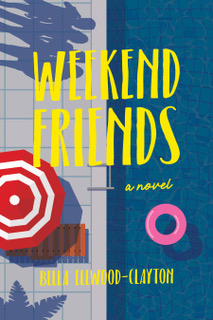
My debut novel, Weekend Friends, is out now (Post Hill Press, Simon & Schuster).
Bestselling author Nicola Moriarty called it “unputdownable!”
About the book:
For girls, the tween years are like The Hunger Games—for their mothers, it’s worse.
Book summary
Food photographer, Rebecca, and her tween daughter, Willow, move from Alaska to Boca Raton, leaving behind their terrible secret about the death of Rebecca’s husband. They’re ready to start anew in the warmth of the sunshine state, hoping it will help vanquish Willow’s night terrors.
As her daughter becomes controlled and bullied by the popular group, Rebecca is drawn closer to the charismatic head of school, Mr. Brady. A hot and steamy—though uncertain—relationship begins. Soon, lies, deception, and secrets cause everything to spiral out of control and both mother and daughter find themselves on the wrong side of their gated community with devastating repercussions.
Full of dark twists and turns, Weekend Friends makes you grateful you’re no longer a tween…or the parent of one.
About the author

Dr. Bella Ellwood-Clayton is an award-winning author. She has a BA from Concordia University in Montréal and a Ph.D. from the University of Melbourne in sexual anthropology—and, yes, that makes for interesting dinner party conversations. Bella’s nonfiction book, Sex Drive: In Pursuit of Female Desire, was published by Allen & Unwin in 2012. Bella has published short stories, poetry, and written for publications such as Huffington Post and Daily Life. She frequently appears on TV and gives talks, including a TEDx talk. Her work has been featured in a National Geographic documentary. Married to a real-life superhero, she lives in Melbourne and has two spirited—eek—teens and a mini Maltese who truly believes he’s a pit bull. When she’s not on her laptop, you can find her downward dogging, pleading with her offspring to go outside, randomly blurting out, “Oh, that’s a good story idea,” and consuming too many vegetarian dumplings.
Reviews for Weekend Friends
Unflinching in its portrayal of modern-day parenting, Weekend Friends is a chilling debut that is as confronting as it is compelling. Unputdownable. —Nicola Moriarty, international bestselling author of novels including The Fifth Letter, Those Other Women and You Need to Know.
Ellwood-Clayton explores the uneasy path of modern parenting, adolescent angst, and the vast consequences of seemingly small choices, where a parent’s best intentions are fraught with danger—and potentially deadly consequences. Weekend Friends is a deeply emotional tale that will make you laugh, cry, gasp, and ultimately leave you haunted with questions that have no easy answers. —Annette Lyon, USA Today bestselling author of Just One More.
A razor-sharp read about the social pressures mothers and daughters face in their respective cliques and how those worlds can collide when more than one person has a secret. —Georgina Cross, bestselling author, Nanny Needed, The Stepdaughter, One Night Dark.
Enticing, and an incredibly poignant delve into modern motherhood. —L.C. North, author of The Ugly Truth.