




There is a reason Hamptons style made such a bang and has stuck around in Australian homes for so long. It’s a near-perfect aesthetic for modern coastal properties, of which we have plenty, and manages to feel relaxed without looking sloppy and polished without feeling stuffy.
Inspired by the seaside communities of Long Island, New York, Hamptons design combines light colours, natural materials, classic architectural details and comfortable furnishings. Its Australian interpretation suits indoor-outdoor living, making it a natural fit for homes built around entertaining and enjoying the sunshine. Thankfully, with a few smart selections and design choices, you can introduce those classic coastal characteristics while still keeping your home feeling like yours.
1. Bring Hamptons Style Outside
A convincing Hamptons home feels connected to its outdoor spaces. Think large windows, covered entertaining areas, light tones inside and out and a clear visual relationship between the garden and interior all contribute to that relaxed coastal atmosphere. Consider whether your outdoor furniture complements your interiors currently or whether a consistent colour palette could make the transition between spaces feel more natural.
White-painted furniture, timber details and neutral cushions can help create a cohesive look. How your property interacts with the surroundings is something to think about via the boundary treatment. Rather than treating fencing as purely practical, consider how it contributes to the overall appearance of your property. Clean, understated fence panels in a complementary colour can frame the home without competing with its architecture.
2. Select a Light, Layered Colour Palette
White and warm off-white are the foundation of Hamptons style, helping rooms and outdoor spaces feel open and airy. From there, introduce softer neutrals like cream, beige and pale grey, with navy, duck-egg blue or even muted shades of green providing accents. When choosing a palette, the trick is not to make everything the same shade of white, as that can leave a room feeling flat or clinical.
Instead, layer different tones and finishes. Warm white walls might sit alongside a cream linen couch, pale timber flooring and navy cushions. These subtle contrasts create depth without sacrificing the crispness associated with the style. And don’t feel obliged to use the navy everywhere when adding accents, as a little goes a long way.
3. Make Natural Materials Do the Talking
Hamptons style is polished, but that can quickly lead into feeling overly manufactured, which you’ll want to avoid. Natural materials bring warmth and texture to white walls and neutral furnishings. Pale timber works especially well for flooring, cabinetry and furniture, while rattan, jute and seagrass introduce organic texture. Linen and cotton can then be used as strong choices for curtains, cushions, bedding and upholstery.
Focus on contrast in rooms instead of going for every material everywhere. A smooth painted wall might sit alongside timber flooring, while a structured sofa can be softened with linen cushions. These combinations stop the aesthetic from feeling too pristine and make the home more inviting.
4. Introduce Classic Architectural Details
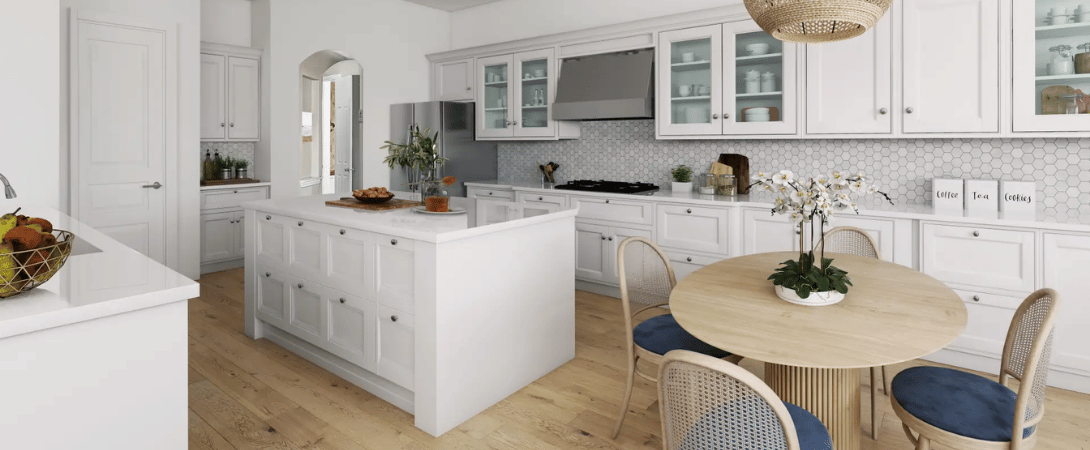
Hamptons style features architectural details like wall panelling, shaker-style cabinetry, decorative mouldings and classic trims that give the look its recognisable character. Don’t feel like you need to install panelling throughout the house because a feature wall, hallway or bedroom can often be enough to introduce the detail.
Shaker cabinetry is perfect for this style, especially in kitchens and bathrooms. Its simple framed doors feel traditional without looking overly ornate. If your home already has architectural character, work with it rather than covering it up. Hamptons design generally works best when it enhances the existing structure instead of forcing a completely new personality onto the space.
5. Choose Comfortable, Timeless Furniture
Another appealing element of Hamptons design is that it should feel lived in. Think generously sized sofas, comfortable armchairs, upholstered dining chairs and substantial bedheads. Classic silhouettes work well, but furniture should still invite people to sit down and relax. This is especially important in Australian homes, where entertaining, family life and indoor-outdoor movement are often central to the layout.
Be sure to consider the practicality of the space alongside appearance, as you’ll want your space tailored to your routines and lifestyle. If you have children, pets or frequent visitors, durable upholstery and easy-to-care-for fabrics can be more useful than delicate materials requiring constant attention. Try to create an elegant home that people can actually enjoy, rather than one where everyone is afraid to touch anything.
6. Keep Coastal References Subtle
Here’s where many Hamptons interiors go wrong: too many obvious seaside decorations. You don’t need anchors on the walls, shells on every surface or signs announcing that you’re near the beach. The coastal feeling should come from the overall atmosphere.
Introduce stripes through a cushion or rug, choose artwork inspired by the landscape, and incorporate natural textures through baskets and timber accessories. Blue-and-white accents can reinforce the theme without overwhelming the room. The result should feel like a sophisticated coastal home rather than a beach-themed holiday rental.
7. Pay Attention to the Finishing Touches
Once the larger elements are in place, smaller details help bring everything together and really help you feel like you’ve built your forever home. Lighting is a good starting point. Choose fixtures with classic shapes and finishes that complement your existing hardware. Brass, chrome and brushed nickel can all work, depending on whether you prefer a traditional or contemporary interpretation.
Mirrors can help reflect natural light, particularly in smaller rooms and hallways. Meanwhile, linen curtains, textured rugs and carefully chosen cushions add softness without introducing competing styles.
Of course, don’t forget the exterior, either. Landscaping, the front entry, driveway and fencing all influence the impression your home creates. A neat, understated boundary can complement a pale facade, while PVC fencing may offer a practical, low-maintenance and sustainable home improvement option for homeowners after a clean finish.
Making Hamptons Style Your Own
A well-crafted Hamptons-inspired home takes the fundamentals – light colours, natural materials, architectural details and comfortable furnishings – and adapts them to the people living there.
You might prefer traditional shaker cabinetry and decorative mouldings, or a more contemporary interpretation with clean lines and fewer embellishments. Either approach can work, but focus on creating a home that feels bright, comfortable and connected to the outdoors. When you get that balance right, the coastal character will follow naturally.