



by Anita Pugs
| Nursery rugs are often chosen for colour and softness, but those features reveal little about how a rug will behave once a baby begins crawling. A rug specialist with more than 20 years’ experience explains what parents should inspect, question and plan for. |
By the time most nurseries are finished, a family has spent weeks comparing cots, testing mattresses, reading up on monitors and agonising over paint swatches. The rug is usually the easy decision, chosen because it looked soft in a photo, or matched the curtains.
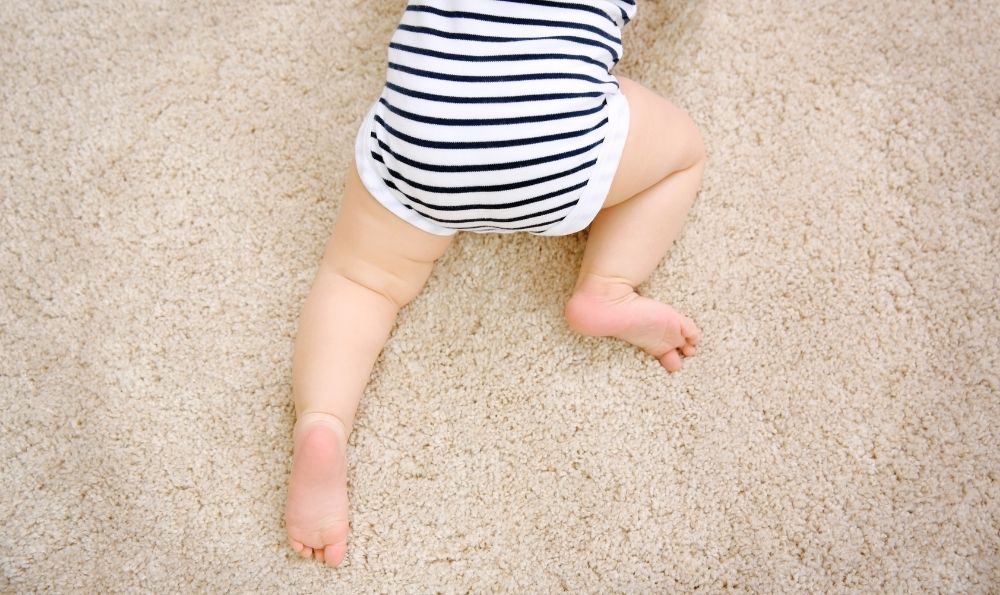
That changes the moment a baby starts spending real time on the floor. Once rolling turns into crawling, and crawling turns into pulling up on furniture, a rug becomes something the baby will sit on, chew near, fall onto and eventually stand on with unsteady legs. How it looks is no longer the only question worth asking.
After more than two decades working with rugs, the problems parents come back with are rarely about the shade they chose. They’re almost always something more basic: the rug moved, the edges lifted, or the care label meant something different to what they assumed.
Start underneath the rug
The first thing worth checking has nothing to do with fibre or softness – it’s whether the rug stays put. Rugs shift on timber, laminate, hybrid, vinyl and tile floors more than people expect, and edges that lift or curl are an obvious hazard for a baby learning to crawl, cruise or take first steps nearby.
A non-slip underlay helps, but only if it suits the floor underneath and is fitted properly, generally cut slightly smaller than the rug, so it grips the backing without peeking out at the edges. Kidsafe’s national home safety checklist specifically asks whether rugs and mats are secured with non-slip backing, as a standard check for a child-safe living space. Check the rug and underlay periodically, and replace either if it no longer lies flat or grips effectively. No underlay makes a rug completely immovable, it’s one layer of safety, not a guarantee.
Inspect the construction
Before buying a rug, or deciding whether to keep using one, get down on the floor with it. Check that the edges are securely finished, the stitching isn’t unravelling, and no decorative trim comes away easily in small hands. Look at the backing for cracking, and whether the rug lies flat or persistently lifts at the corners.
It’s also worth asking whether fibres pull out unusually easily, whether long fringing suits a crawling and playing baby, and whether the pile is deep enough that small toys or food could disappear into it unnoticed. Some new wool rugs release loose surface fibres at first, and how long this continues can vary with their construction. Loose surface fibre is different from tufts pulling free, edges unravelling or a rug that will not lie flat.
We have seen beautifully made and poorly made rugs in almost every common fibre. The material label tells you what a rug contains; it doesn’t tell you how securely it has been put together.
Understand what “washable” means
“Washable” is reassuring and often unspecific. Check whether the whole rug goes in a household machine or only the surface can be spot-cleaned, whether it will actually fit a machine once wet and heavy, and whether some marks realistically still need professional cleaning.
Allow the rug to dry completely before returning it to the floor, following its care instructions. Treat spills according to the label rather than assuming one cleaning method suits every rug. In homes with hard flooring, open doors, pets and regular traffic in and out, a nursery rug can collect far more sand and everyday grit than its soft appearance suggests, which makes an honest read of the care label worth the five minutes.
Question broad product claims
Phrases like non-toxic, hypoallergenic, eco-friendly, chemical-free and antibacterial appear often on nursery products, and they’re designed to reassure. Many are broad enough to say very little on their own. ACCC guidance to businesses is clear that claims must be true, accurate and based on reasonable grounds, and that vague, unqualified claims can mislead because they don’t give a consumer enough to assess them.
A useful habit is asking what was actually tested – the raw fibre, the backing, or the finished rug – and whether an independent test or certification sits behind the claim, rather than just the word on the tag. This doesn’t mean every rug carrying these words is being dishonest. It means the words alone aren’t enough to decide on.
Choose for a crawling baby and future toddler
A nursery rarely stays a nursery for long. Think ahead to toy storage, spills, eventual toilet-training accidents, pets, and how often the room gets vacuumed. Check that doors swing freely over the rug, that furniture on it doesn’t create an awkward raised edge, and that the size doesn’t leave narrow, fiddly-to-clean strips of exposed floor. A rug that suits a newborn’s nursery should still make sense in a toddler’s room next year. Good quality here isn’t just softness or price – it’s stable construction and a routine the family can actually keep up with.
| A quick note on sleep: Red Nose advises that babies sleep in a safe cot or suitable bassinet, on a firm, clean, flat and correctly fitting mattress. A rug or play mat is for supervised awake time, not infant sleep – worth keeping in mind however comfortable a rug looks. |
The 60-Second Nursery Rug Check
- Does it lie completely flat?
- Does it move when lightly pushed or walked across?
- Are the edges, fringe and backing secure?
- Can I clean and fully dry it according to the care instructions?
- Do I understand what its safety and material claims actually mean?
- Is the underlay suitable for both the rug and the floor beneath it?
- Will it still be practical when my baby is crawling and walking?
A final thought
There’s no single perfect nursery rug, and no fibre or brand that removes every consideration at once. What helps is understanding how the rug in front of you is built, how it needs to be placed and cared for, and what its claims actually mean.
The best nursery rug isn’t necessarily the softest or the most expensive. It’s the one that stays where it’s put, holds up to real family life, and doesn’t come with surprises once your baby reaches the floor.
About Author
Anita Pugs is the owner of Trends Rugs and has worked in the Australian rug industry for more than 20 years. She helps families understand rug materials, construction, sizing and care, as well as how different rugs perform in real homes with children, pets and everyday spills. Her approach is based on practical experience and honest advice, helping customers choose rugs that suit both their homes and the way they live.